

The epidemic stimulated "order reflux", and the textile export industry faces three major difficulties in the second quarter of this year.
Release time:
2021-06-26
Under the impact of the epidemic, the "return of orders" in the textile and apparel industry has become a hot topic in the industry.
Some textile companies have stated that due to the impact of the COVID-19 epidemic, the apparel industry in India and Southeast Asian countries has been severely impacted, and some orders have been transferred to China. The company's exports of filament yarn increased by nearly 60% from January to April.
Data from the General Administration of Customs shows that from January to May this year, China's textile and apparel exports totaled US\$112.69 billion, a year-on-year increase of 17.3%, and a 13.2% increase compared to the same period in 2019. Among them, textile exports were US\$56.08 billion, a year-on-year decrease of 3.1%, and apparel exports were US\$56.61 billion, a year-on-year increase of 48.3%. In May, apparel exports were US\$12.2 billion, a year-on-year increase of 37.1%; textile exports were US\$12.123 billion, a year-on-year decrease of 41.29%, and an increase of 4.1% compared to the same period in 2019.
Recently, some business people revealed to media reporters that orders have indeed returned. According to their understanding, some garment manufacturing companies have orders scheduled until 2022. However, at the same time, many merchants, enterprises, and industry insiders also stated that the sharp increase in shipping costs, the appreciation of the RMB, and the rising costs of upstream textile yarns, fabrics, and products remain important factors hindering enterprises.
According to data from the China National Textile and Apparel Council Industry Economics Research Institute, in the 2020-2021 fiscal year, India exported US\$21.67 billion worth of textile and apparel products, a year-on-year decrease of 19.3%. CCTV Finance reported that under the impact of the new round of epidemics, due to the inability of workers to work, Indian apparel companies lost a large number of apparel export contracts. The export volume of the hosiery center in Ludhiana, a city in northern Punjab, India, decreased by 35%, and the absenteeism rate of apparel industry workers in Delhi and Bangalore, major apparel centers, reached 50%.
News of "order return to China" has been circulating in the market since last year. Some textile industry insiders also hold different views on the "order return to China." Some industry insiders believe that this is "hype," because although the epidemic situation in Southeast Asia and India is serious, it has not reached the point where production is impossible. Some intermediaries deliberately exaggerate the sense of crisis, while behind it are some capital players trying to speculate on futures and bulk commodity prices.
This industry insider said that according to the expected recovery of global market demand, driven by the Tokyo Olympics, some sports brands will see a significant increase in orders in the summer of this year. However, Japan currently does not allow overseas spectators to watch the games. Therefore, for these sports brands, the customer purchase rate will definitely decrease significantly, so customers will not place orders so actively, and manufacturers will not stock up so much.
Some industry insiders said that textile exporting companies faced three major difficulties in the second quarter of this year: a sharp increase in shipping costs, rising exchange rates, and continued rising prices of bulk commodities.

“The sharp increase in shipping costs is due to the outbreak of the epidemic overseas, especially in India, which has caused a significant impact on the global supply chain. Pushing the supply chain upward will affect the imbalance of global shipping, leading to a surge in prices of domestic ocean shipping routes. However, due to the epidemic, other countries may have many containers piled up in ports, and they can ship goods quickly, so their shipping costs are relatively low.” This industry insider gave an example. The freight for a container has increased from US\$5,000 to US\$10,000, while the entire container may only be worth US\$30,000, with freight accounting for more than one-quarter. "This has caused some products with relatively low profit margins to lose their competitiveness compared to products from other countries, and there is no need to export them because exporting will result in losses."
“The appreciation of the RMB is because the epidemic is well controlled domestically, and there is relatively high import-related inflationary pressure domestically. Therefore, the RMB has also appreciated significantly since the second quarter, with an appreciation of about 2%-3%. This appreciation is a loss that foreign trade export companies have to absorb themselves,” said the industry insider.
In addition, this industry insider also suggested that, from the perspective of the entire chemical fiber industry, exports account for only about 6% of total production capacity. Therefore, from the perspective of company management, domestic sales can make the company's capital flow frequency higher, and economic benefits or safety risks are within grasp. Currently, foreign sales are relatively "mediocre."
Further Reading:
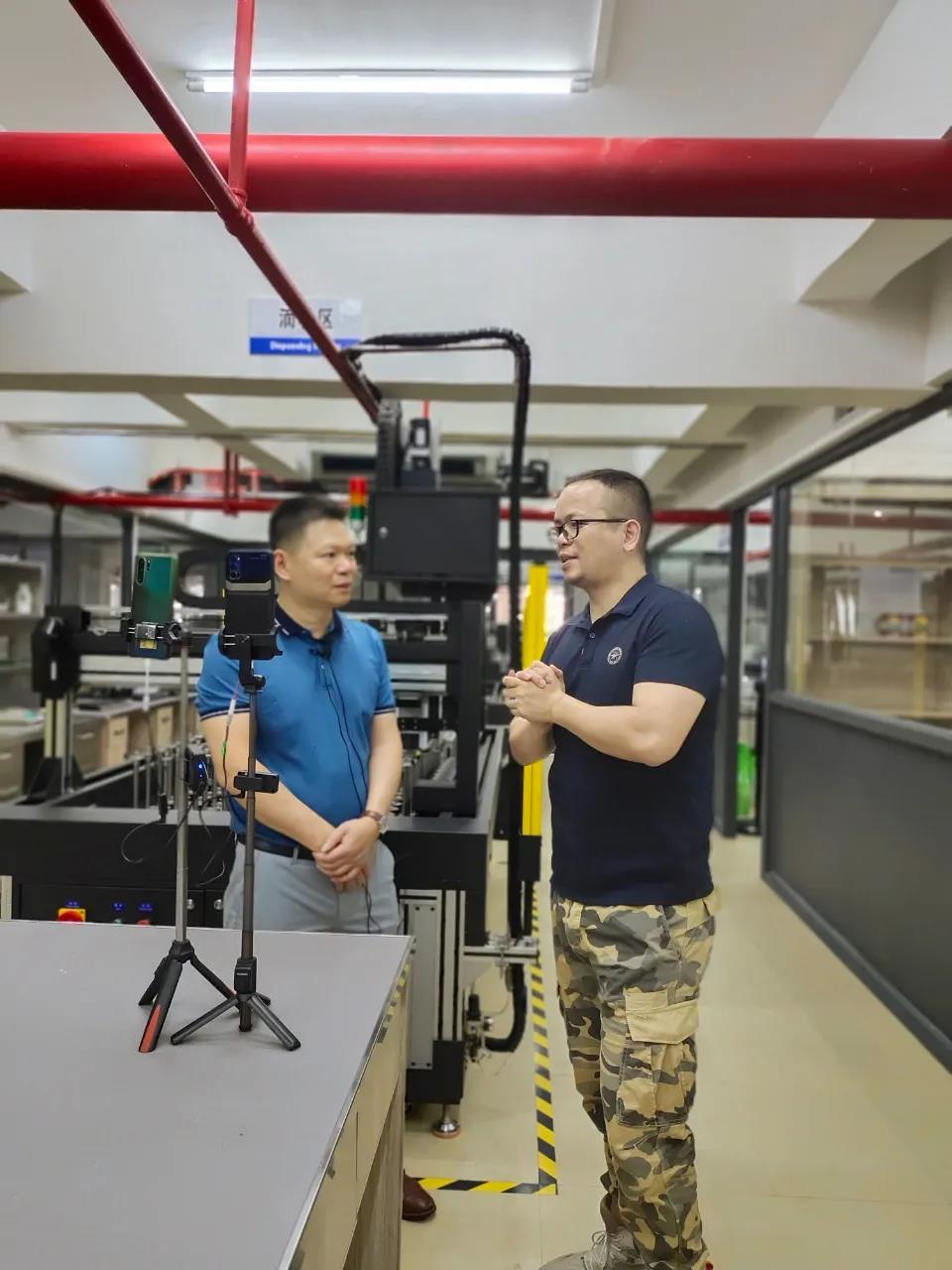

Under the impact of the global COVID-19 pandemic, the garment industry in India and Southeast Asian countries has been severely affected, with some orders shifting to China. The phenomenon of textile orders returning to China against the current has become a hot topic in the industry.
At the 2020 China International Textile Machinery Exhibition and ITMA Asia Exhibition, Guangzhou Hongjing Lab Equipment Co., LTD, as a pioneer in intelligent manufacturing dyeing and finishing laboratories in China, showcased its latest intelligent integrated laboratory concept!
The Xida Xing Hongjing dyeing and finishing standard laboratory's overall design adopts a one-stop design for dyeing and finishing laboratories, divided into different functional areas: color measurement and matching area, light box color matching area, cloth cutting area, gray cloth preparation area, fabric opening area, dripping area, manual dripping area, sample dyeing area, reproduction area, and finishing area. Each area is equipped with dyeing and printing experimental equipment independently researched and developed by Hongjing, perfectly matching the laboratory's sample making and reproduction process.
In the first two months of this year, against the backdrop of the low base effect caused by the epidemic in the same period last year, China's total goods trade exports and textile and garment exports both achieved high-speed growth of over 40%. Cumulative exports of textiles and garments reached 301.36 billion yuan, an increase of 44.7%, with textile exports reaching 144.44 billion yuan, an increase of 50.2%, and garment exports reaching 156.92 billion yuan, an increase of 40.0%.
Contact Us
MS.JINGHUA ZHOU (Emily)
mobile:(+86)13925171028
Company address: B2 Building, No.3823 Guangxia Road, Baiyunhu Street, Baiyun District, Guangzhou
E-mail:export33@gzhongjing.com